Is Skin Picking OCD or Something Else?
TL;DR Skin picking can sometimes happen as part of OCD, but many people who struggle with chronic skin picking actually have a condition called Excoriation Disorder (also known as Dermatillomania or a Body-Focused Repetitive Behavior/BFRB). While OCD and skin picking can look similar on the surface, the reasons behind the behavior are often different. Understanding why the picking happens matters because it helps guide the most effective treatment.
If you’ve ever found yourself picking at your skin without fully realizing it—or felt stuck in a cycle of “I need to stop” followed by doing it again—you’re not alone. And no, it’s not just about willpower.
Many people wonder whether skin picking is part of OCD. The short answer is: sometimes, but not always.
Skin picking exists in a gray area that can overlap with OCD, anxiety, perfectionism, sensory regulation, and emotional coping. That’s part of why it can feel so confusing.
You might notice yourself:
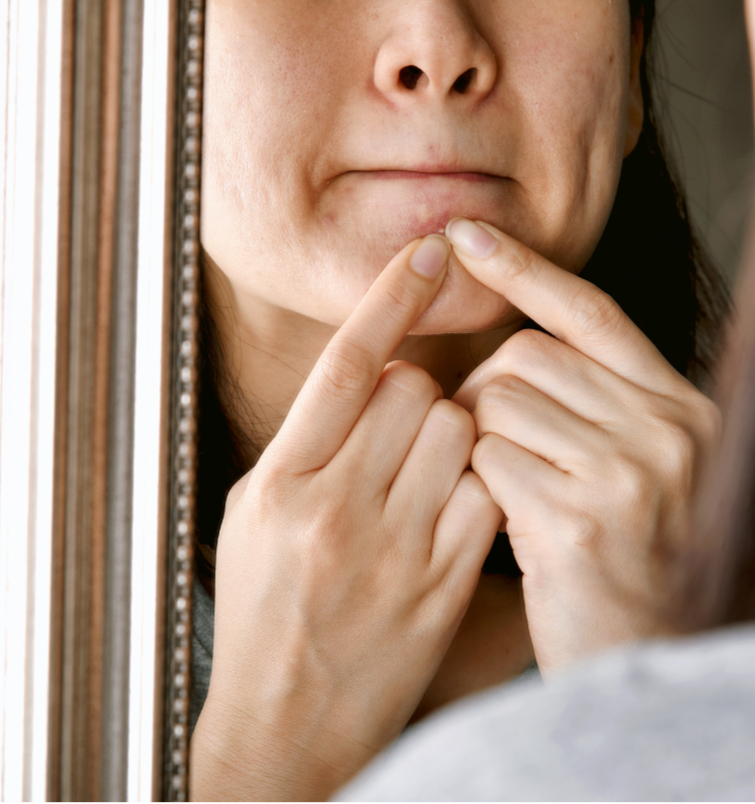
Picking bumps, scabs, acne, or uneven skin
Spending long periods of time in the mirror
Feeling unable to “leave it alone”
Picking more during stress, boredom, overwhelm, or anxiety
Feeling relief while picking, followed by guilt or frustration afterward
And because there’s often a strong urge involved, many people assume it must automatically mean it is an OCD compulsion. But that’s not necessarily the case.
What Is Excoriation Disorder?
Excoriation Disorder, also called Dermatillomania or Skin Picking Disorder, is a mental health condition where someone repeatedly picks at their skin in a way that can cause distress, emotional suffering, or physical damage.
It falls under the category of Body-Focused Repetitive Behaviors (BFRBs), alongside things like hair pulling (trichotillomania), cheek biting, nail biting, etc..
For many people, skin picking is not driven by intrusive obsessive thoughts in the way OCD usually is. Instead, the picking may happen because:
The skin feels uneven or “wrong”
There’s a strong sensory urge
Picking temporarily relieves tension or discomfort
The behavior becomes automatic or habitual
Picking helps regulate emotions or nervous system activation
Sometimes people describe it as entering a trance-like state where they lose track of time. Others feel hyperfocused on “fixing” imperfections.
The important thing to understand is that skin picking is not simply a “bad habit.” It’s a complex nervous system and behavioral process.
So How Is OCD Different?
Obsessive-Compulsive Disorder (OCD) involves:
Obsessions — intrusive, unwanted thoughts, fears, or mental images
Compulsions — repetitive behaviors or mental rituals done to reduce anxiety or prevent something bad from happening
When skin picking is part of OCD, the picking is usually connected to an obsession or fear.
For example:
“If I don’t remove this bump, something bad will happen.”
“I need my skin to feel perfect or I can’t relax.”
“I can’t stop thinking about contamination unless I pick this.”
In OCD, the behavior is often performed to neutralize distress from an intrusive thought.
With Excoriation Disorder, the picking is more commonly driven by sensory urges, emotional regulation, tension relief, hyperfocus, or automatic habit loops rather than fear-based obsessions.
That said, OCD and skin picking can co-occur. Some people experience both.
Why Skin Picking Feels So Hard to Stop
A lot of people blame themselves for skin picking because they think:
“If I really wanted to stop, I would.”
But BFRBs don’t work that way.
Skin picking often becomes reinforced in the brain because it temporarily changes how you feel:
Less anxious
More focused
Relieved
Soothed
Distracted
Regulated
Even if the relief only lasts a moment, the brain learns:
“This behavior helps.”
Over time, the picking cycle becomes deeply wired neurologically and emotionally.
This is also why shame usually makes the behavior worse—not better.
Common Triggers for Skin Picking
Skin picking can be triggered by many different things, including:
Anxiety or stress
Perfectionism
Sensory sensitivity
Feeling emotionally overwhelmed
Boredom or understimulation
Mirrors or bright lighting
Acne or skin texture changes
Fatigue
Dissociation or zoning out
For some people, picking increases during periods of high stress. For others, it actually happens more during downtime while watching TV, scrolling on their phone, or trying to fall asleep.
Treatment for Skin Picking
The good news is that skin picking is treatable.
Therapy for skin picking often focuses on understanding:
What triggers the behavior
What function the picking serves
What emotions, sensations, or thoughts happen beforehand
How to interrupt the cycle without shame
Treatment may include:
Cognitive Behavioral Therapy (CBT)
Nervous system regulation strategies
Sensory replacement tools
Reducing body-focused shame and self-criticism
One of the biggest misconceptions is that recovery means “just stop picking.” In reality, healing usually involves building awareness, understanding the brain-body connection, and creating new ways to respond to urges.
You Don’t Need to “Earn” Help
A lot of people minimize their skin picking because they think:
“It’s not bad enough.”
“Other people have it worse.”
“I should be able to control it.”
“It’s just a habit.”
But if skin picking is affecting your emotional wellbeing, self-esteem, relationships, daily functioning, or the way you feel in your body, it deserves support.
You do not need to wait until things are severe to seek help.
Final Thoughts
Whether your skin picking is connected to OCD, Excoriation Disorder, anxiety, ADHD, or emotional regulation, the struggle is real—and treatable.
The goal is not perfection. The goal is understanding the pattern with compassion instead of shame.
Because healing rarely happens through self-criticism. It happens through understanding what your brain and nervous system are trying to do in the first place.
Looking for a therapist in New York who can help you with skin picking?
About the Author
Alison Mann, LCSW is a licensed psychotherapist and founder of Authentically You Therapy, where she specializes in body image healing, anxiety, eating disorders, and body-focused repetitive behaviors. Her work is rooted in body-positive values and neurodivergent affirming care. Alison is also the founder of Aid by Ali, a platform providing mental health resources for individuals experiencing hair loss. She is passionate about helping people feel safe to be their authentic self.