5 Powerful Ways to Improve Your Body Image
If you’ve ever felt like your body image depends on the number on a scale, the lighting in a mirror, or how your jeans fit that day, you’re not alone. Contrary to what people think, body image lives in our brain, NOT our body. To support our body image, it relies supporting our brain more than it does altering our body. The trap of trying to alter one’s body in order to improve body image is one that keeps many people stuck. This blog will discuss 5 ways to improve your body image and slowly get un-stuck.
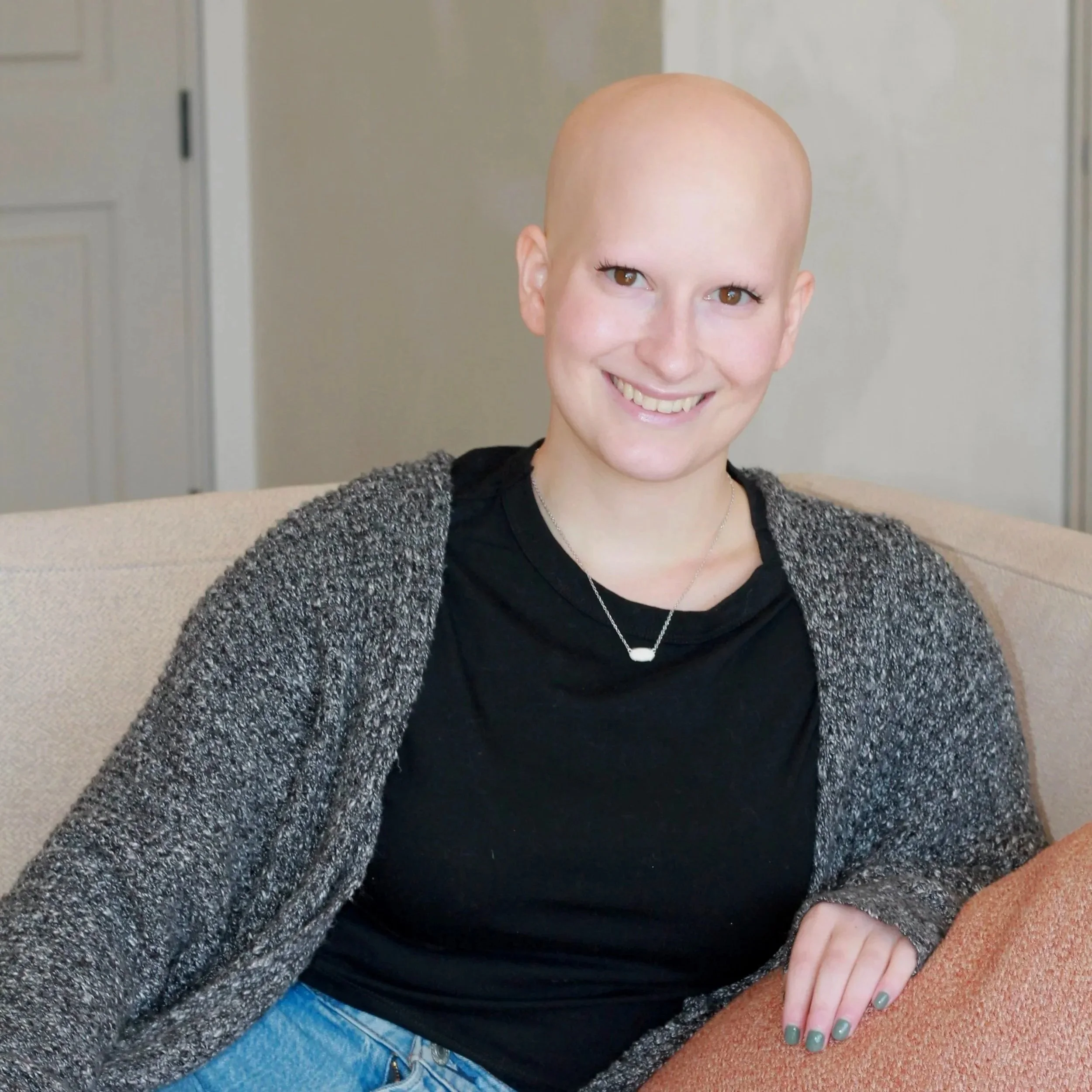
As a therapist who grew up fully bald, I know firsthand how early and deeply appearance-based narratives can take root. When your body feels “different,” “wrong,” or “not enough,” it can quietly shape how you move through the world. The good news? Body image is not fixed and has the ability to improve.
Here are five powerful ways to improve body image, including how to interrupt the patterns that keep negative body image stuck.
1. Identify the Behaviors That Maintain Negative Body Image
Most people think negative body image is maintained by thoughts alone. But more often, it’s reinforced by behaviors, especially:
Body checking (frequent mirror checking, pinching, measuring, weighing, comparing photos, scrutinizing reflections in windows)
Body avoidance (avoiding mirrors entirely, skipping photos, wearing only baggy clothes, avoiding social events, refusing to buy new clothes until you “change”)
Both body checking and body avoidance temporarily reduce anxiety. But long term? They strengthen the belief that your body is a problem which then reinforces the sticky negative thoughts.
Improving body image starts with noticing:
When am I checking?
When am I avoiding?
What am I trying to solve when I engage in these behaviors?
Can I actually solve it this way?
Awareness is the first interruption.
2. Gradually Break Body Checking and Avoidance Patterns
Stopping checking overnight is unrealistic. Often many of these behaviors happen automatically and take time, patience and intentionality to break the cycle. If you body check:
Choose one checking behavior to reduce (e.g., only allowing yourself to check in the mirror twice instead of ten times).
Gradually allow yourself to build up the ability to sit in the discomfort of not checking again when you notice the urge return.
Notice what comes up during the discomfort of resisting the urge to check.
If you avoid:
Start small (stand in front of a mirror for 30 seconds, wear one slightly more fitted piece of clothing at home, allow yourself to be in one photo with friends etc.)
Gradually allow yourself to build up the ability to sit in the discomfort of not avoiding when you notice the urge returns.
Notice what comes up during the discomfort of resisting the urge to avoid.
3. Shift From Appearance-Based Worth to Value-Based Living
Negative body image thrives when appearance becomes your primary measure of worth.
Ask yourself:
If my body were no longer the main focus, what would matter most? What would my day to day look like?
What kind of person do I want to be — regardless of size, hair, shape, or skin? What does that look like in practice?
When you make decisions aligned with your values (connection, creativity, leadership, compassion), body image naturally takes up less space.
Confidence is built through action, not appearance.
4. Reduce Comparison Inputs
Social comparison is gasoline on the fire of body dissatisfaction.
Take inventory of:
Social media accounts that trigger comparison
Before-and-after content
Body transformation messaging
Conversations that revolve around dieting or appearance critique
You don’t have to eliminate everything. But curating your inputs matters.
Unfollow accounts that make you feel inadequate.
Follow accounts that promote body neutrality, diversity, and functionality.
Limit mirror selfies and image zooming behaviors.
Your brain adapts to what you repeatedly expose it to, so it is important to be intentional. Try filling your social media with lots of body diversity!
5. Practice Body Neutrality and Self-Compassion
Loving your body is not a requirement for body image healing. Neutrality and self-compassion are some of the most powerful tools.
Body neutrality sounds like:
“This is my body today.”
“My body is allowed to change.”
“My worth is not determined by appearance.”
Self-compassion sounds like:
“This is hard, but I will be my own teammate through this.”
“Of course I’m struggling in a world obsessed with appearance. I am allowed to be upset, but I will not blame my body”
“I can feel discomfort without punishing myself.”
For many people, learning to relate to their body with neutrality and compassion, rather than constant evaluation, is the real turning point.
The Bigger Picture
Body image healing is not about convincing yourself you’re attractive enough. It’s about breaking the monitoring system that keeps you stuck.
When you reduce body checking…
When you stop avoiding your reflection…
When you choose values over appearance…
When you limit comparison…
When you practice neutrality…
You begin to reclaim mental space and develop a more peaceful relationship with your body.
Looking for Support?
I offer a free consultation call for new clients where we can talk about what you’re experiencing, explore whether therapy feels like a good fit, and discuss next steps in a low-pressure way. Learn more about body image therapy
👉 Schedule your free consultation call (for clients in New York)
About the Author
Alison Mann, LCSW is a licensed psychotherapist and founder of Authentically You Therapy, where she specializes in body image healing, anxiety, eating disorders, and body-focused repetitive behaviors. Her work is rooted in body-positive values and neurodivergent affirming care. Alison is also the founder of Aid by Ali, a platform providing mental health resources for individuals experiencing hair loss. She is passionate about helping people feel safe to be their authentic self.